Wave Compression: Consolidation After Strong Rally
The past two weeks have demonstrated an important aspect of wave-based momentum frameworks: strong rallies often require periods of consolidation where internal structure resets even as prices hold steady or continue higher. Markets extended the recovery from the March geopolitical selloff, with SPY rallying over 5% from early April through mid-month before entering a healthy consolidation phase. The framework navigated this period with multiple state transitions as momentum oscillators worked off extreme overbought conditions.
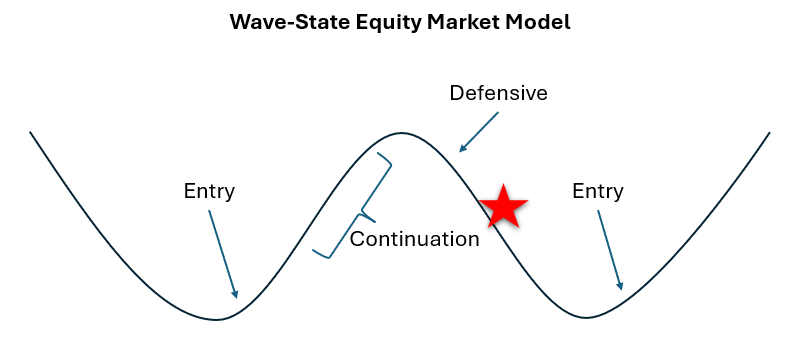
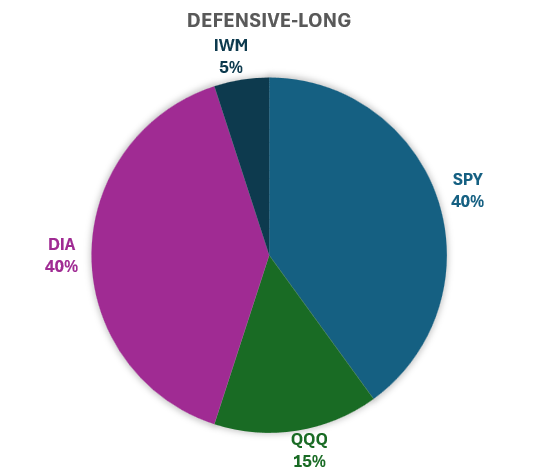
From April 10 through April 24, the portfolio delivered approximately +4.65% versus SPY's +5.07%, underperforming by roughly 40 basis points during this rapid advance. The underperformance came from defensive positioning during key portions of the rally—the framework remained in its defensive allocation from April 7-13 as wave structure signaled caution, then briefly shifted to a more aggressive posture from April 14-20 before returning to defensive positioning on April 21. The wave structure peaked on April 17 with momentum readings in extreme overbought territory, then began compressing over the following week as the market consolidated gains. Interestingly, SPY actually gained ground during this consolidation phase even as internal breadth and momentum readings fell significantly, illustrating how wave compression can occur through time rather than price.
The current consolidation is markedly different from the March trough. During March, the wave structure collapsed into deeply oversold territory as moving averages rolled over and breadth deteriorated across the board. The current environment shows wave readings compressing from extreme highs while the underlying trend structure—captured by rising 20-day moving averages—remains intact. This type of consolidation typically resolves more quickly than trough formations because the framework is digesting gains rather than repairing damage. The defensive positioning provides downside protection if consolidation turns into correction, while keeping the portfolio positioned to capture any resumption of the uptrend when structure confirms.
Since inception in early December, the Wave-State Model has delivered approximately +4.40% versus SPY's +4.39%, essentially matching the benchmark through significant volatility and multiple market regimes, while structurally de-risking the portfolio at the appropriate times. The framework has now navigated a major geopolitical selloff, a violent recovery rally, and a consolidation phase with state transitions occurring as structure dictated. The goal remains consistent risk management that preserves capital during adverse conditions and participates when opportunities emerge, even if execution isn't perfect during every market phase.
Performance Summary:
Two-Week Period (Apr 10-24): ROQ +4.65% vs SPY +5.07% (-0.42% underperformance)
Since Inception (Dec 3 - Apr 24): ROQ +4.40% vs SPY +4.39% (+0.01% outperformance)
Author note: Market analysis and this blog post were conducted and written with the assistance of AI analysis under human oversight.
Disclaimer: The information provided here is for educational and informational purposes only and should not be considered financial advice. I am not a licensed financial advisor, and my portfolio may not be appropriate for your financial goals or risk tolerance. All investments involve risk, including the potential loss of principal. Historical data and market models are not indicative of future results. Please consult with a licensed financial professional before making any investment decisions.